The French Riviera is not hard to enjoy. But when it comes to French Riviera slow travel, it’s hard to enjoy well if you’re trying to do everything.
Most people arrive with an impossible list: Nice, Monaco, Cannes, Èze, Villefranche, Antibes, maybe Saint-Tropez before they realize it’s three hours away on a good day. All in seven days, all done properly, all with their ‘must-see!’ spots saved on Google Maps. And somewhere around day three, standing on a hot crowded platform with aching feet, sweating through the linen shirt packed for photo ops, they realize the problem.
The French Riviera rewards slowness. The same coast that feels relentless when rushed becomes a different place when you stop treating it like a checklist and start treating it like a place you actually live in for a week.
I’ve done both, several times. Here’s my advice for people who want to enjoy the slower version.
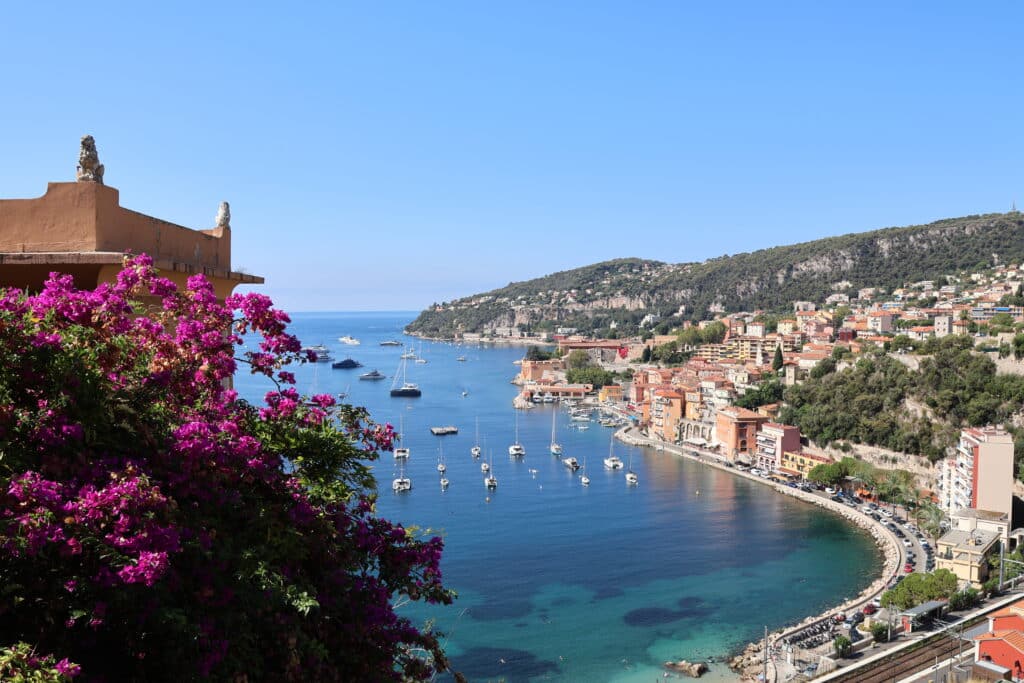
What French Riviera Slow Travel Actually Means
Before anything else: slow luxury on the French Riviera is not only about money, it’s about decisions.
It means choosing one beautiful base and staying there. It means planning a morning around a single town rather than three. It means a long lunch in the shade with a glass of rosé that you don’t cut short because you have a train to catch. It means knowing where you’re going to swim before you arrive, and arriving there unhurried with a fresh bag from a local boulangerie you popped into simply because it looked good.
The opposite, which is what most first-timers do, is perfectly understandable. When you’ve saved for a trip to one of the most famous coastlines in the world, it feels wrong to miss anything. So you try to do it all and end up seeing it from a train window, or from a platform, or in an anxious scan of Google Maps trying to work out if you can make Monaco before the light goes.
The slow version says: you cannot see it all, and you shouldn’t try. Pick fewer things and do them properly. Leave feeling like you actually lived on the coast for a week instead of passing through it.
That’s the version worth planning.
Is French Riviera Slow Travel Right for You?
Slow luxury Riviera travel suits a specific kind of traveler. Worth being honest with yourself before you start planning.
This approach is built for you if:
- You’re traveling as a couple, on a honeymoon, or celebrating something special and want quality over coverage.
- You find rushing between crowded sights more draining than memorable.
- You’re staying five nights or longer and want an actual atmosphere, not just a camera roll full of landmarks.
This style doesn’t fit you if:
- Your main goal is ticking off six or seven towns in a week.
- Unscheduled downtime feels like wasted time.
If the second list describes you, that’s a valid way to travel. You will just need a different travel guide.
CUSTOM ITINERARIES
Want a slower trip? I build the days to match.
Slow travel doesn’t mean no plan — it means a plan that leaves room. A Custom Route with the timing built in but the pressure removed. Rest days, long lunches, no rushing.
“The recovery day on day 4 saved the trip.“
Where to Base Yourself for French Riviera Slow Travel
This is the most important decision you’ll make.
A slow luxury trip where you move bases every two days breaks the momentum and wastes at least half a day. With check-out times at 10:00 AM, check-in times at 3:00 PM, dragging luggage around in heat on a Saturday when every train or bus is filled with day-trippers going to Monaco will guarantee you’re tired and frustrated for the rest of the day, wondering why the whole day was wasted.
The classic mistake is choosing somewhere because it sounds impressive. Nice is famous. Cannes is glamorous. Antibes, the ‘quiet’ one will leave you fighting the crowds for a dinner table at 8:00 PM. But famous and right for a slow, polished trip are not always the same thing. I once booked a place in Nice because someone said it had “great views”, but I didn’t check the nearest beach or bus stops. It took a tram and two buses just to reach the train station, and I regretted it by the time we checked-in.
Nice — the elegant city base. Nice is busy, cosmopolitan, and genuinely beautiful and practical. The old town is amber buildings and flower market mornings. The Promenade des Anglais is perfect for an evening walk and delivers beautiful coast photos. The restaurants, the markets, and the museum scene are the best on the coast. If you want a city base with real energy and easy access to everywhere, Nice delivers.
The Trade-off: It’s a real, working city. You will feel like a city traveler, which is fantastic—as long as that’s what you expect.
Antibes — the underrated base on the coast. Between Nice and Cannes, quieter than both, and with better access to the kind of coast that makes the Riviera feel like itself rather than a film set. The old town ramparts. Cap d’Antibes. The morning market. A food scene that consistently punches above its weight. For a couple wanting a relaxed base with beach time, good restaurants, and less noise, Antibes delivers more than its reputation promises.
The Trade-off: You’re not the first one rushing to this ‘hidden gem’. Yes, it’s quieter than other famous French Riviera bases, but it’s also smaller. The town center gets busy in the evenings and the dinner spots fill up fast.
Beaulieu-sur-Mer — the quietly elegant option. Fewer people know to choose Beaulieu. It sits between Nice and Monaco, with a sheltered bay, a beautiful palm-lined promenade, and a quietness that feels chosen rather than accidental. The connections are easy — Nice is 10 minutes by train, Monaco is 12. If your version of the Riviera involves less crowd and more looking at the sea, Beaulieu deserves serious consideration.
The Trade-off: If you’re looking for night-life, skip it. The party scene here is the corner bar where a few locals will judge your too-fancy clothes.
Saint-Jean-Cap-Ferrat — the exclusive end of the scale. The peninsula between Beaulieu and Villefranche is home to some of the most expensive real estate on earth for a reason. Extraordinarily beautiful, calm, and removed from the tourist circuit even in peak summer. Hotels here are fewer, better, and more expensive. If your version of slow luxury tips toward privacy, sea views, and not encountering large tour groups, Cap Ferrat is the answer.
The Trade-off: You’re further from town centres, so days need a little more planning.
Menton — for calm and character at the eastern edge. Menton is different in texture from the rest of the coast. More Italian in feel, less polished, less visited, and arguably more charming for it. The old town is stacked pastel buildings and lemon groves. The market is excellent. Monaco is just 12 minutes by train. The Italian border is even closer. If you want a base that most visitors never find, Menton is the answer.
The Trade-off: The farthest away town on the whole French Riviera, so any town visits need to be intentionally planned to avoid wasting time.
One rule, regardless of which you choose: pick one base and stay for the whole trip. Every hotel move costs you a morning minimum, disrupts whatever rhythm you’ve built, and almost never adds as much as it disrupts. The Riviera is a day-trip coast — you do not need multiple bases to see it properly.
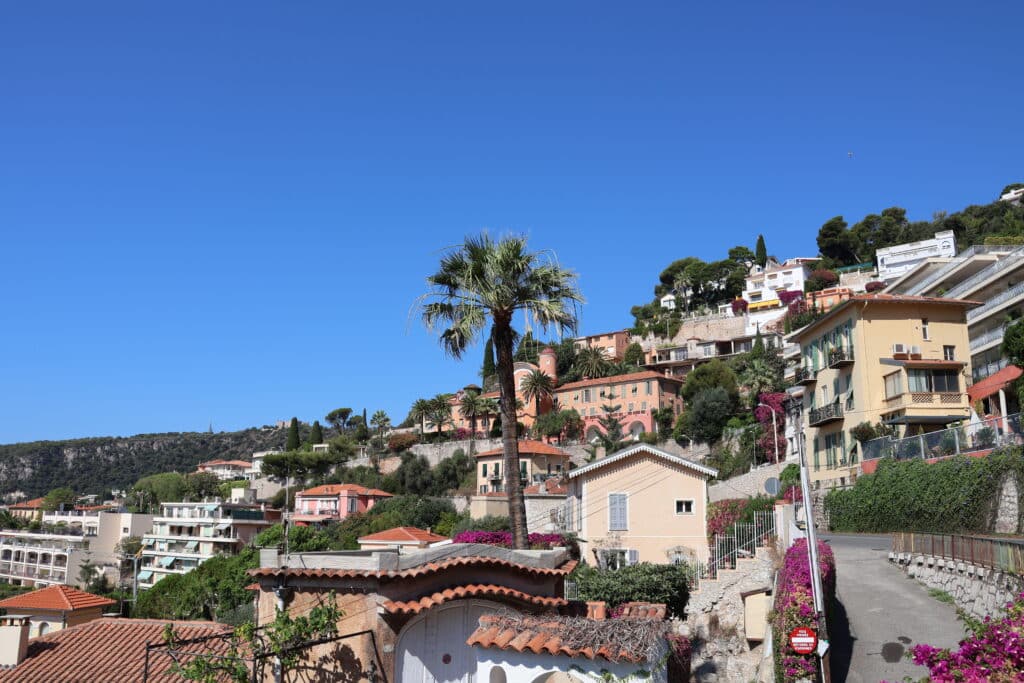
What a Slow French Riviera Day Actually Looks Like
A good slow-luxury day doesn’t need fifteen entries in the plan. It needs a clear direction and enough breathing room so that it can drift slightly without the whole thing collapsing.
Slow morning. Coffee and a croissant at a café terrace near your stay. Sit, read, watch the city wake up.
One key destination. Explore one neighborhood, coastal path, or market before the midday heat hits.
A long lunch. Reserve a shaded terrace table, order local seafood and cold rosé, and spend two hours eating without checking the clock. Or grab a fresh baguette, local cheese, or sandwiches from a market stall to take to the beach.
Afternoon by the sea. Spend the warmest hours swimming at a rocky cove or reading under an umbrella at a beach club. Enjoy just being in one of the most beautiful places in Europe.
Golden Hour stroll. The hour before dinner, when the coastal light softens and local life spills into the streets, is the best time of day on the coast. Grab your camera.
That’s the day. Not five sights, two trains, a rushed lunch, and a museum visit squeezed in before closing. One arc, done properly, in a place worth being.
The Towns That Suit This Style and Key Transport Logistics
Not every Riviera town rewards a slow approach equally. Some are better for passing through while others are places you can genuinely inhabit for a morning or a day.
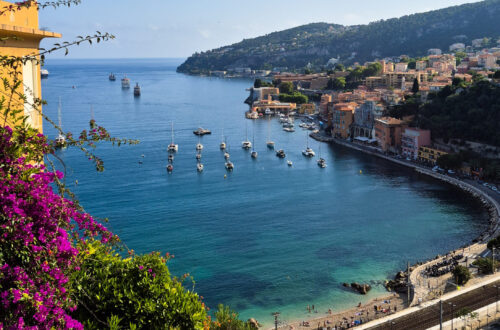
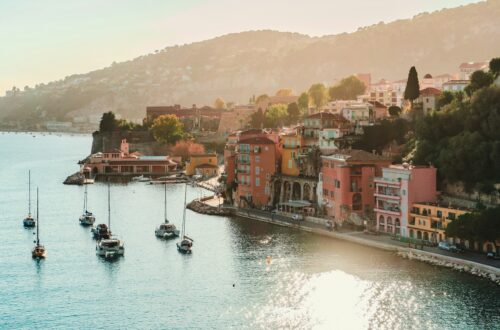
Villefranche-sur-Mer: Less than 7 minutes from Nice by train. Famous for its deep bay, citadel, and pastel harbor. Ideal for a slow morning stroll and a swim at Plage des Marinières.
Èze Village: Sitting 429 meters above sea level, Èze offers dramatic cliffside views. Crucial logistics tip: Do not take the train to Èze-sur-Mer expecting to stroll up to the village—it lands you at the beach, leaving a 1.5-hour uphill hike on the Nietzsche Path in the summer heat (and yes, I’ve seen tourists arrive in sandals and a tote bag, thinking they’d just walk up. They never made it.) Instead, take Bus 82 directly from Nice (Vauban hub) or arrange a quick ride straight to the village gates before 10:00 AM.
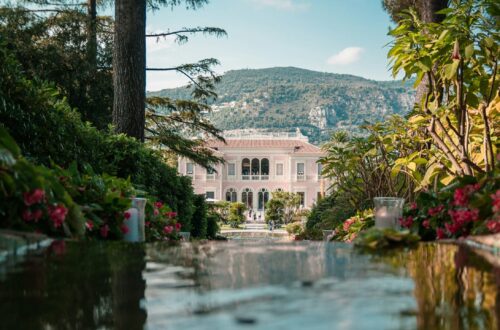
Saint-Jean-Cap-Ferrat Walk: Take the train to Beaulieu-sur-Mer and walk the flat, paved Promenade Maurice Rouvier along the water directly into Saint-Jean (approx. 20 minutes). Visit the stunning Villa Ephrussi de Rothschild while you’re there.
Monaco: Works best as a dedicated day trip. Take the 20-minute TER train from Nice, explore the Old Town on the Rock (Le Rocher), visit the Oceanographic Museum, and have lunch overlooking the harbor.
Tip: Monaco doesn’t have to be scary. Check out The Actual Cost of a Monaco Day Trip, where I tracked every euro across visits.
Plan Your Trip
You’ve picked your style. Build the days.
Two ways to take the next step.
Or try a single day for €29 first. Email me if you’re unsure.
What Ruins a Slow Luxury Riviera Trip
I’ve reviewed enough client itineraries to have opinions on this.
Choosing a base for the wrong reasons. Booking somewhere because it sounds famous or glamorous or because a ‘cousin heard about it on TikTok’, without checking whether the location and style suits how you actually want to feel on a Tuesday morning, is one of the most common reasons a Riviera trip doesn’t quite land. Nice is a large city. You don’t want to be stranded in the wrong part of the town, 20 minutes away from the nearest bus station and 50 minutes away from the beach.
Moving accommodation more than once. Repeating myself, because it is that important. Every hotel move costs you half a day minimum and breaks whatever rhythm you’ve built. The coast is small enough to day-trip from one base. Moving between hotels does not add to the experience — it subtracts from it.
Overscheduling the luxury. A “nice” restaurant every night, a beach club every afternoon, a spa every morning — this doesn’t compound into a luxurious feeling. It compounds into a hectic one with better décor. The point of slow luxury is having time that is unscheduled and not feeling guilty about it. Do not worry about pre-booking every restaurant and create a ‘hybrid’ version instead: book a couple of your favorite places and freestyle for the rest. Just wander the towns and sit down wherever you fancy.
Trying to cover too many towns. Five towns in five days is a sightseeing trip, not a slow one. Nothing gets the time it deserves. Two or three towns done properly is consistently more memorable than five towns touched.
Treating the trip as a performance. The most expensive version of the French Riviera and the most enjoyable version are not always the same thing. The best slow-luxury trips tend to involve one exceptional hotel, two or three exceptional meals, a lot of unhurried time near the water, and very little effort to prove anything.
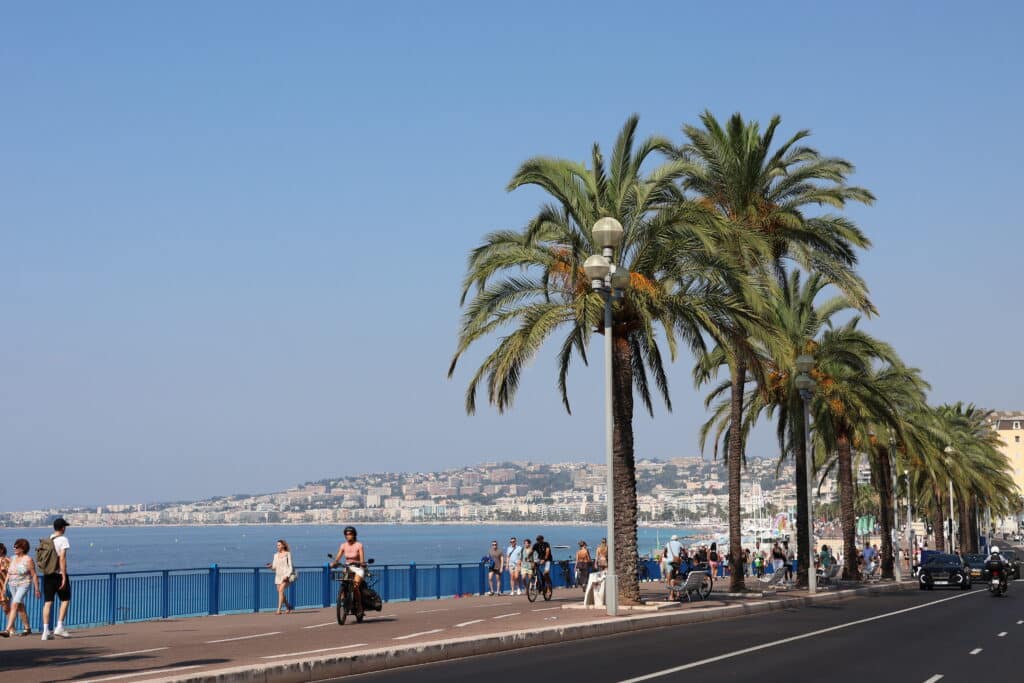
Route Logic for a Slower French Riviera Trip
A few example flows — not full itineraries, just the shape of what works.
Nice + Villefranche-sur-Mer + Monaco. Three or four days. Nice as your base. One slow morning in Villefranche. Monaco as a proper full-day destination rather than an afternoon dash. Both reachable by train in under 25 minutes, one direction, no backtracking.
Antibes + Cannes + Cap d’Antibes. A week in Antibes with the old town and market as your anchor. One day into Cannes. One afternoon along the Cap coastline. Long beach and pool time in between. A deeply pleasant way to spend a week that doesn’t feel rushed at any point.
Beaulieu-sur-Mer + Saint-Jean-Cap-Ferrat + Nice. A quieter, more refined version of the eastern stretch. Beaulieu as the base, the coastal walk to Cap Ferrat on foot, and Nice as an easy city day when you want energy and a good dinner.
Menton + Monaco + one slow scenic day. For people who genuinely want calm. Menton as a quiet base. Monaco for one long, properly explored day. A morning market visit and an afternoon at the water for everything else. Restorative rather than impressive.
The pattern across all of these: one base, days pointed in one direction at a time, and at least one day with no real plan beyond being somewhere beautiful.
One More Thing
There’s a version of the French Riviera that feels like it sounds in the imagination — beautiful, warm, unhurried, worth every hour of the journey to get there. And there’s a version that leaves people thinking it was fine, but somehow more exhausting and less special than they expected.
The difference is almost never the budget, I’ve done the French Riviera for €1700 and also for €4000. It’s usually the structure: the wrong base, too many towns, not enough time in any of them, and no one having thought carefully about how the days connect.
This article gives you the logic. A custom plan gives you the specifics — the right base for your travel style, the towns in the right order for how you want the trip to feel, the pacing that fits your actual pace, and a curated shortlist of where to eat that isn’t just the same places every other guide recommends.
If you want the trip planned properly rather than pieced together from twelve different articles —that’s what I do →
Get the 3-day plan for whichever base you pick
Three tested day plans — one for a Nice base, one for Antibes, one for Menton. Train timings, walking routes, and the small details that turn a good day into a great one.
Join 200+ travelers who get the planning math before the trip.
Last updated: July 2026. Written for travellers staying five to ten nights on the French Riviera who want an unhurried, well-paced experience over a rushed one.