I have a problem with AI travel advice. Not the “it’s a useful tool” problem — the “I just watched it recommend a bus that hasn’t run since 2024” problem. I can’t relax into a trip if I suspect the plan I’m following was generated from a blog post someone scraped three years ago.
So I did what I do: I asked ChatGPT to plan me a perfect French Riviera day trip. It gave me a beautiful itinerary. Chronological. Detailed. Confident. It was also wrong in ways I wouldn’t have caught unless I’d already spent three years testing every route myself.
The errors weren’t obvious. They were subtle enough that a first-time traveler would follow the plan, arrive at the bus stop, and stand there confused when the 9:05 AM bus to Èze never showed up.
Because that bus doesn’t exist.
AI travel planning in 2026 is fast, confident, and often dangerously incorrect. The problem isn’t that AI lies — it’s that AI doesn’t know what it doesn’t know. And the gaps are exactly where your trip falls apart. And this is exactly why I now build French Riviera itineraries for people who don’t want to show up at a bus stop that serves a bus that hasn’t run since 2024.
The AI Confidence Trap
Here’s the thing: AI can generate a plan in 30 seconds. It’s fast, it’s confident, and it sounds like it knows what it’s talking about. But it doesn’t know when a schedule changed, when a bus stop moved, or which 10-minute window actually matters.
That’s why people keep asking me: “Why would I pay a human when AI can do it for free?”
Fair question. Here’s the answer.
AI trains on the past. It knows what someone wrote in 2023 about the 2024 bus schedule. It knows what Google thinks sunset is. It knows the top 10 lists that everyone else is copying.
I know what’s happening right now. I know which bus actually runs, which platform to stand on, and which shortcut saves you 15 minutes of uphill walking. I’ve tested the 9-Minute Monaco Sprint with a stopwatch. I’ve photographed golden hour at 15-minute intervals to find the actual window. I’ve tracked every euro across two Monaco visits so I can tell you exactly where your money goes — and where it doesn’t need to.
AI gives you a list of things to do. I give you a list of things you don’t have to worry about.
So yes, you can use AI to plan your French Riviera trip. It’ll give you something that looks like a plan. It’ll even sound confident.
But if you want a plan that actually works — tested, timed, and tailored to 2026 reality — that’s what I do. Unless you want to figure it out yourself — if you enjoy scrolling through 4-year-old Reddit threads to find the €2.50 airport tram that Google Maps sometimes refuses to acknowledge.”
I’ve spent three years testing these routes myself — here’s the actual French Riviera town order that makes sense.
Custom Itineraries
Tired of AI itineraries that get it wrong? Get one that doesn’t.
Every ChatGPT suggestion has a 30% error rate on this coast — wrong bus numbers, closed museums, missed train changes. The Custom Route is built on what I’ve personally tested. Same days, none of the mistakes.
Not ready for a full plan? Try a single day for €29 first →
The Èze Bus Trap: Ask 3 AIs, Get 3 Different Answers
I ran an experiment. I asked ChatGPT, Perplexity, and Gemini the same question:
“What time does the bus from Èze-sur-Mer train station to Èze Village run in the morning?”
Here’s what they told me:
| AI Tool | Its Answer | Actual 2026 Schedule |
| ChatGPT | Bus #83 at 9:05 AM | ❌ No bus at that time |
| Perplexity | Bus #83 every 30 min starting 8:45 AM | ⚠️ Partially correct, misses seasonal changes |
| Gemini | Walk the Nietzsche Path (no bus info) | ❌ Irrelevant advice |
The actual answer? In 2026, the first reliable morning bus up to Èze Village is around 09:56. The next one is 10:56. If you show up at 9:05 expecting a bus, you’ll wait 51 minutes at the bottom of a cliff with no shade, no shops, and increasingly murderous thoughts about ChatGPT.
This isn’t a small mistake. This is the difference between starting your Èze visit at 10:10 AM (cool, empty, magical) versus 11:45 AM (hot, crowded, you’re shuffling through cobblestone bottlenecks behind tour groups).
Real talk: I’ve been to Èze at 9 AM and Èze at 2 PM. They’re not the same village.
AI hallucinates transit schedules. It doesn’t know that the 9:05 bus was discontinued. It doesn’t know that missing that first 09:56 bus costs you the entire peaceful Èze experience.
I know. Because I’ve stood at that bus stop. I’ve timed the departures. I’ve watched tourists arrive at 9:15 looking confused, checking their phones, wondering if they’re in the wrong place.
They’re not in the wrong place. They’re following AI advice. This is exactly why I map out the real 2026 bus schedules in my guides — so you’re not standing there at 9:05 wondering where your bus went, like in my full guide on when Èze is actually worth visiting.
AI Can’t Rank “Worth It-ness”
AI is binary. It tells you: “Go here, then there.” It doesn’t understand trade-offs.
Ask AI for Monaco recommendations and it’ll suggest the Oceanographic Museum. Fair — it’s famous, it’s interesting, it’s on every list.
What AI won’t tell you:
• The museum takes 90-120 minutes to see properly
• It’s on the opposite side of Monaco from the train station
• If you only have 4 hours in Monaco total, the walk back to catch your train in the summer heat will make you regret every life choice that led to this moment
• The museum is indoors, which means you’re missing the actual Monaco experience (the harbor, the palace, the views) for something you could do on a rainy day
AI can’t tell you when a “must-see attraction” is actually a “day-ruiner” for your specific itinerary.
I can. Because I’ve done the walk. I’ve felt the regret. I know which activities fit which time windows and which ones sound good until you’re standing there sweaty and late for your train.
AI gives you a list of places. I give you a list of places in an order that doesn’t destroy your energy, your schedule, or your mood.
Why AI Will Never Discover the “9-Minute Monaco Sprint”
AI will tell you: “Take the train to Monaco, then walk to the Palace for the 11:55 AM Changing of the Guard.”
Sounds simple. It’s not.
What AI won’t tell you:
• Which train to take (the 11:36 from Èze gets you there by 11:46 — that’s exactly 9 minutes to make it)
• Which exit to use at Monaco station (NOT the main Monte Carlo exit — use Sortie Fontvieille)
• That there’s an elevator to Place d’Armes that saves 5 minutes of uphill walking
• That if Bus #1 or #2 is waiting, you can hop on for 1 stop to the Palace
• That if the bus isn’t there, you take the Rampe Major red brick path (steep but direct)
• That this exact route, if you follow it precisely, gets you to the Palace at 11:50 AM — just in time to get a viewing spot before the ceremony starts
I call this the “9-Minute Monaco Sprint.” It’s the difference between seeing the ceremony and watching other people’s backs while you stand 10 rows deep.
AI has no concept of this. It can’t. Because the 9-Minute Sprint isn’t written down anywhere. It’s not in a blog post. It’s not in a guidebook. It’s the kind of knowledge you only get by running the route with a stopwatch, testing both elevator and bus options, and timing exactly how long each segment takes.
Plan Your Trip
You’ve picked the base. Build the days.
Two ways to take the next step.
Or try a single day for €29 first. Email me if you’re unsure.
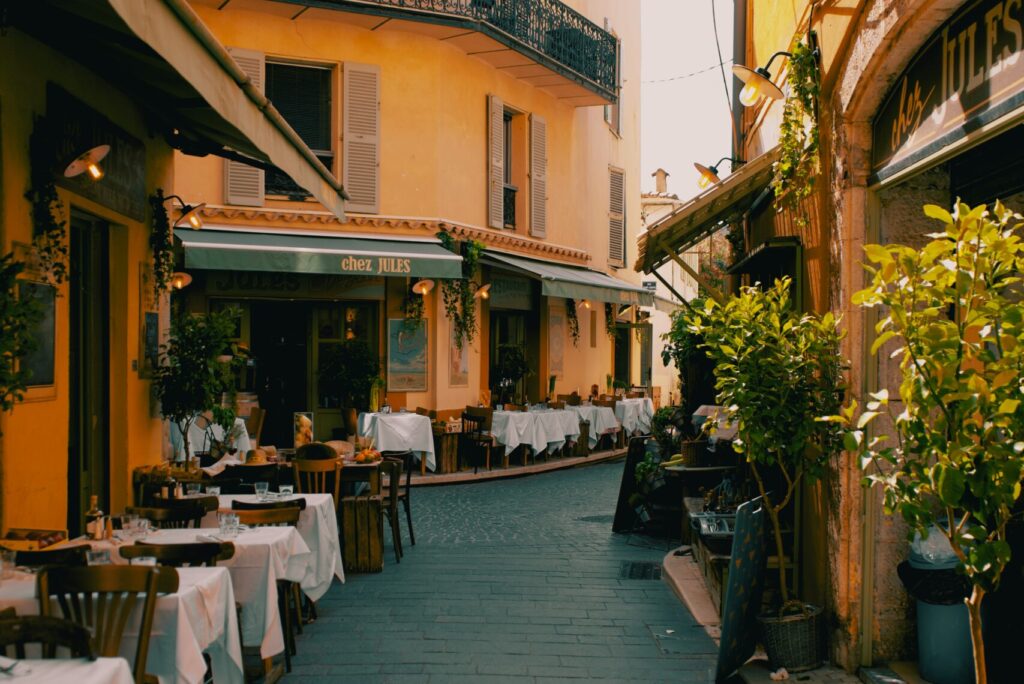
The Golden Hour Problem: AI Trusts Google, You Should Trust Reality
Ask AI when to photograph the French Riviera at golden hour and it’ll pull sunset times from Google.
Google says: “Sunset at 8:45 PM.”
AI says: “Be at the Promenade des Anglais at 8:00 PM for golden hour.”
You show up at 8:00 PM. The light is flat. The color is grey. Your photos look like a cloudy Tuesday in November.
Why?
Because Google doesn’t know about the massive limestone cliffs behind Nice that block the sun 75 minutes before it hits the horizon. The “official” sunset time is when the sun would set if Nice were a flat prairie. Nice is not a flat prairie. Nice is backed by mountains.
The actual golden hour windows I’ve tested in my previous visits:
• Nice: 6:30-7:15 PM (45 minutes, not the 8:00-8:45 PM that AI suggests)
• Monaco: 6:00-6:30 PM (30 minutes, even shorter because of the Rock)
• Menton: 6:45-7:30 PM (45 minutes, slightly later because of eastern positioning)
I know this because I photographed the same spots at 15-minute intervals. I have timestamped photos showing exactly when the light turns gold and exactly when it goes flat.
AI doesn’t. It just knows what Google says. And Google is wrong by over an hour.
The “Itinerary That Looks Good on Paper” Problem
I asked ChatGPT to plan a Nice-Monaco-Èze day trip. Here’s what it gave me:
• 8:00 AM: Breakfast in Nice Old Town
• 9:30 AM: Train to Èze
• 10:00 AM: Explore Èze Village
• 2:00 PM: Lunch in Monaco
• 4:00 PM: Visit Monaco Casino
• 7:00 PM: Return to Nice
This looks fine. It’s chronological. It includes the major sites. It even builds in time for lunch.
It’s also completely wrong.
Here’s what actually happens if you follow this plan:
• 9:30 AM train to Èze: You arrive at 9:45. The first bus up to the village is 09:56 (you got lucky). But you didn’t know to sit on the right side of the train for sea views — small detail, ruins the experience.
• 10:00 AM Èze exploration: By the time the bus gets you to the village (10:06), you have less than 2 hours before you need to head to Monaco. That’s not enough time to properly see Èze Village + Jardin Exotique. You’ll rush. Rushing ruins Èze.
• 2:00 PM lunch in Monaco: This is exactly when the cruise ships unload 3,000 people. The restaurants you want are full. The market stalls have packed up (they close at 1:00 PM). You end up paying €25 for a mediocre sandwich.
• 4:00 PM Casino: The free Atrium access ended at 1:00 PM. Now you’re paying €19 to enter, and you need your physical passport or ID (not a photo on your phone). Did you bring your passport for a day trip? Probably not.
• 7:00 PM return to Nice: You’ve missed golden hour entirely (it ends at 7:15 PM). Your photos are flat. You’re exhausted. The day felt rushed and expensive.
AI builds itineraries that work in theory. I build itineraries that work when you’re standing at the train station wondering why nothing is going according to plan.
AI Gives You a To-Do List. I Give You a Don’t-Worry List.
If ChatGPT tells you “Take the bus to Èze,” you still have to:
• Find the bus stop (is it at the station exit or across the street?)
• Figure out which side of the road (uphill or downhill?)
• Buy a ticket (cash or card? Where’s the machine?)
• Validate the ticket (before boarding or after?)
• Know which bus number (83, but what if there are multiple 83s with different destinations?)
• Worry if you’re on the right bus until it starts moving
AI gives you the task. You get the anxiety.
My version:
“Exit Èze-sur-Mer train station. The bus stop is directly ahead, 20 meters from the exit. You want the #83 going UPHILL (direction: Èze Village). The ticket machine is on your right — it takes cards. Buy a €1.70 ticket. Validate it in the yellow box when you board. The bus has ‘ÈZE VILLAGE’ on the front display. You’ll know you’re on the right bus when it immediately starts climbing uphill.”
Same information. Zero anxiety.
That’s the difference between AI planning and tested planning. AI gives you a list of things to do. I give you a list of things you don’t have to worry about.
The Hidden Costs: AI Says “Monaco is Expensive.” I Tracked Every Euro.
AI travel advice loves vague warnings:
“Monaco is expensive.”
“Bring plenty of cash.”
“Budget more than you think.”
Cool. How much is “plenty”? How expensive is “expensive”?
I tracked every single euro across two Monaco visits. Train tickets, coffee, that bottle of water that made me audibly gasp, the bathroom I didn’t know cost money, everything.
AI can’t do this. It doesn’t have receipts. It just parrots generic advice.
I can tell you:
• The train from Nice to Monaco is €6 each way (€12 round trip)
• Coffee at a café terrace: €4-6
• Coffee standing at the bar: €1.50-2.50
• Water bottle at a kiosk: €2-3
• Water bottle at a touristy spot: €6 (yes, really)
• Public bathroom: €1 (or free if you know which ones)
• Museum entry: €0-15 depending on which one
• Beach club lounger: €25-40 (completely optional)
The difference between a €49 Monaco day and a €188 Monaco day isn’t how expensive Monaco is. It’s which choices you make.
AI tells you to “budget for Monaco.” I tell you exactly which €6 water bottle to skip and where the free bathrooms are.
One costs you money. One saves you money.
Guess which one AI is?
The Real Question: Do You Want a Beautiful Plan or a Plan That Works?
AI is great for inspiration. It’s terrible for execution.
It can generate a beautiful itinerary in 30 seconds. Chronological, detailed, formatted perfectly. It looks professional. It sounds confident.
But it doesn’t know:
• Which bus actually runs
• Which platform to stand on
• Which elevator saves your knees
• Which 10-minute window turns a good photo into a professional one
• Which restaurant is closed on Tuesdays
• Which “must-see” attraction is actually skippable
• Which timing mistake costs you 2 hours
You know what costs people the most money on the French Riviera? Not expensive restaurants. Not yacht clubs. Not five-star hotels.
It’s following AI advice that sounds good but doesn’t account for reality.
It’s showing up at a bus stop at 9:05 and waiting 51 minutes.
It’s missing the Palace Guard ceremony because you didn’t know about the 9-Minute Sprint.
It’s standing at the Promenade at 8:15 PM with flat grey light wondering why your photos look nothing like Instagram.
AI generates plans. I test them.
AI knows what’s on the map. I know what works in reality.
AI gives you information. I save you 10 hours of research and a week’s worth of frustration.
So here’s the honest answer: Should you use AI to plan your French Riviera trip?
Sure. Use it for ideas. Use it for suggestions. Use it to generate a rough outline.
Then verify everything. Check the bus schedules. Test the timings. Cross-reference the hours. Read recent reviews. Look at 2026-specific updates.
Or — and I’m obviously biased here — use someone who’s already done all of that.
Someone who knows the 09:56 bus exists because they’ve taken it. Someone who’s timed the 9-Minute Monaco Sprint with a stopwatch. Someone who’s photographed Nice at 15-minute intervals to find the actual golden hour window.
That’s what I do. I test routes. I time connections. I track expenses. I make spreadsheets about bus schedules because I have a problem and that problem happens to be useful for anxious travelers.
AI can give you a plan. I can give you a plan that actually works.
© 2026 Clever Escapes
Three perfect days on the French Riviera
Three tested day plans – Villefranche, Nice, Èze. Exact train times, walking routes, and the micro‑tips that turn a good day into a magical one.